The Gimli Glider: how an airliner ran out of fuel and still landed safely
In 1983, a measurement mix-up left an Air Canada 767 with under half the fuel it needed. Its crew glided it down to a closed air base in Manitoba.
Reviewed by Jackson on Nov 7, 2026. How we work
Quick answer
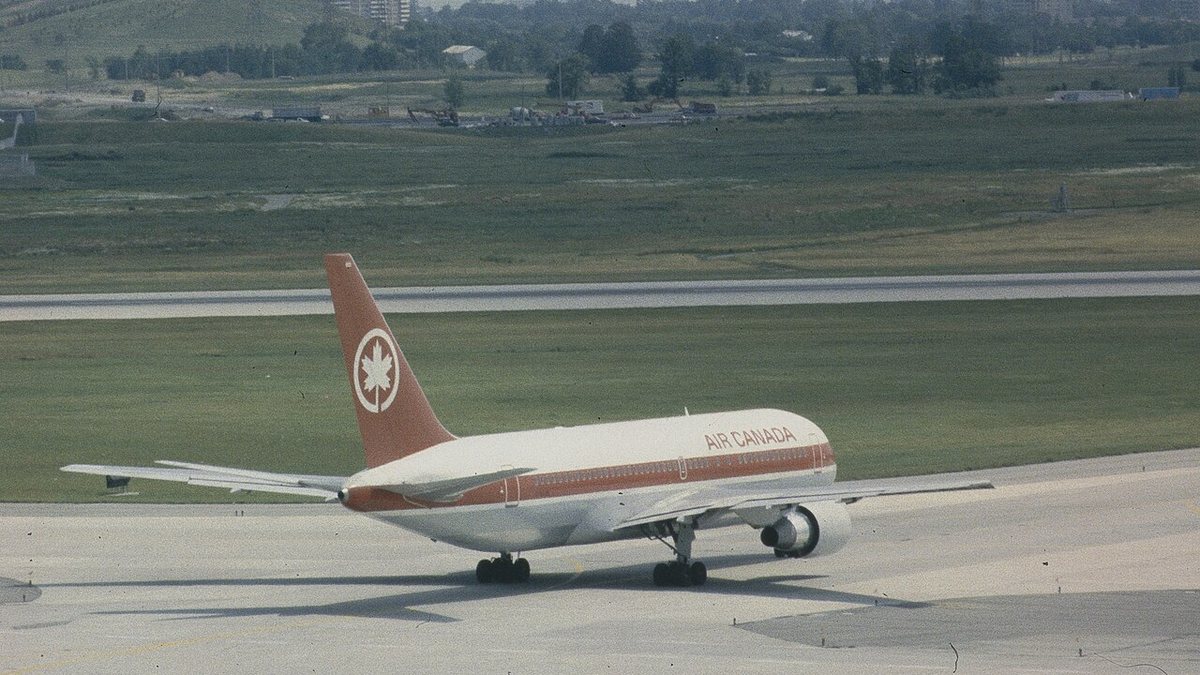
The Gimli Glider is the nickname of an Air Canada Boeing 767 that ran out of fuel at 41,000 feet on July 23, 1983. The crew glided it to a former air base at Gimli, Manitoba, with no serious injuries.[1]

In this article
Why it mattersHow the fuel went wrongSeventeen minutes without enginesThe landing at GimliWhat we don't know yetWhat changedSourcesKey points
- A failed fuel gauge meant the crew had to work out the fuel load by hand.[1][2]
- The conversion used a figure for pounds per litre where kilograms were needed, leaving about 45% of the fuel required.[1][2]
- With both engines out, the plane glided for 17 minutes without engine power.[1]
- The inquiry faulted Air Canada's procedures, training and manuals, not just one calculation.[1][2]
Why it matters
The story shows how serious failures usually build from several small ones. A faulty sensor, a new metric aircraft and unclear responsibility for fuel checks all had to line up before the tanks ran dry.[1][2]
How the fuel went wrong
The 767 was new to Air Canada's fleet and tracked fuel in kilograms, while the rest of the fleet used pounds. With the gauges blank, the fuel load was measured with a dripstick and converted by hand. The figure used, 1.77, was pounds per litre. The right figure was about 0.8 kilograms per litre.[1][2]
Fear of Landing reports that the flight needed 22,300 kilograms but held 22,300 pounds, or just over 10,000 kilograms. A second dripstick check at Ottawa repeated the same mistake, so the plane took off for Edmonton believing it had enough fuel.[2]
Seventeen minutes without engines
Over Red Lake, Ontario, warnings sounded for fuel pressure on one side and then the other. Both engines stopped. Most of the cockpit's electronic screens went dark, and the backup instruments didn't include a vertical speed indicator. The emergency checklist had no section for losing both engines.[1]
Captain Bob Pearson was also an experienced glider pilot and chose a speed of 220 knots as his best guess. First Officer Maurice Quintal worked out that they wouldn't reach Winnipeg, and proposed the former air force base at Gimli, where he had once served.[1]
The landing at Gimli
Neither pilot knew that part of the base had become a racetrack, or that a car race was under way. Coming in too high and too fast, Pearson put the plane into a forward slip, a move used in gliders to lose height without gaining speed.[1]
The nose gear didn't lock, and the nose scraped along the ground, adding friction that helped slow the plane. It stopped short of the crowd. The aircraft had only minor damage, was repaired, and stayed in service until 2008.[1]
What we don't know yet
- Some details. Our accounts differ on small points, including who did which part of the fuel calculation, and we haven't read the original Board of Inquiry report.
What changed
- Nov 7, 2026: First version.
Sources
- Wikipedia: Gimli Glider (accessed Nov 7, 2026)
- Fear of Landing: The Gimli Glider (accessed Nov 7, 2026)